Soul, Style and Speed at the Wigan Casino
- Jack Curson
- May 16, 2025
- 11 min read

Updated: May 27, 2025
Jack Curson
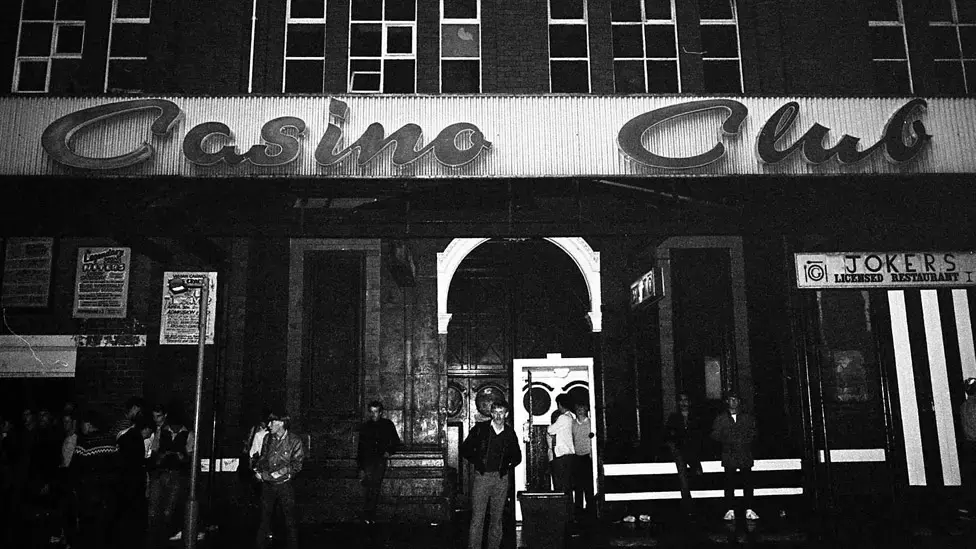
The Grand Arcade in Wigan’s town centre is to all intents and purposes no different than any of the other run-of-the-mill shopping centres that are fixtures of town and city centres across the UK. However the site where now sits a few unremarkable shops and cafes used to be the home of the Casino Club, familiarly known as the Wigan Casino, the final incarnation of a building which was built as a ballroom around the time of the First World War. During the 1970s the Wigan Casino was a nightclub which came to be renowned throughout the country, and indeed the world, as the spiritual home of Northern soul.
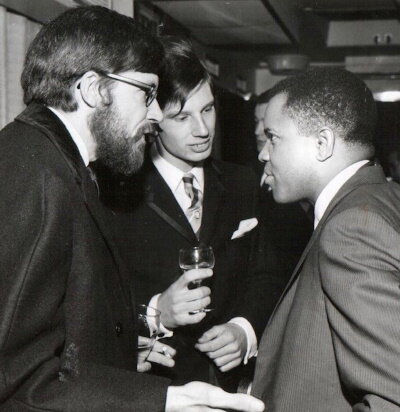
Northern soul is a music and dance movement which came out of Northern England and the Midlands in the late-1960s and early-70s, emerging from a split within the mod subculture between those who favoured the new sounds of psychedelic rock and those who stayed true to the original mod soundtrack of soul and R&B. Northern soul is defined by its espousal of a specific type of soul music originating from so-called ‘Black America’, music characterised by a heavy beat and fast tempo of around 100 beats per minute. It eschews Motown or Motown-influenced music which gained popular appeal and mainstream commercial success on its release in favour of records by lesser-known artists which were released in limited numbers, colloquially known as ‘rare grooves’. In fact, the term ‘Northern soul’ was actually coined by music journalist and record shop owner Dave Godin as a shorthand sales term in response to just this predilection amongst northern football fans, who when travelling down to London to watch their team would stop off at his Soul City record shop. These soul enthusiasts showed no interest in the latest developments of the R&B chart or the more contemporary sounds of the emerging funk scene and instead sought older soul tracks, the more obscure the better.
It was through Northern soul and its rich culture of music, dance and fashion that a seemingly nondescript building in an unremarkable Lancashire town going through the painful process of industrial decline became an icon. Amazingly it was a Wigan-born DJ, one who was immersed in the Northern soul scene but who’d previously been playing his sets at a local rugby club, that would provide the spark for the beginning of the Wigan Casino’s famed all-nighters, weekly events whose popularity and acclaim would lead the club to be named by Billboard as the world’s number one nightclub, outranking New York’s glamorous Studio 54 when it was at the peak of its powers. Northern soul continues today through music events, dance competitions and beyond, but it was through the Wigan Casino that its star shone furthest and brightest.
Open the Door to Your Heart: The Casino’s Beginnings

The Wigan Casino is comfortably the best remembered Northern soul nightclub today, but there were many others that were crucial during the scene’s formation and early development in the late-1960s and early-70s. One of the earliest of these was the Twisted Wheel in Manchester, which from the mid-1960s ran its own all-nighter every Saturday from 11pm through to 7:30am, until the introduction of a local bylaw in 1971 prevented the club from staying open for more than 2 hours into the following day, forcing the end of its all-nighters and the venue’s closure soon after. From its genesis, all-nighters were an important feature of the Northern soul scene. In many cases the decision to hold all-nighters were due to promoters choosing to run these more alternative events after their mainstream nights had finished, however the all-nighter soon became prized as the quintessential format for Northern soul events.

The closure of the Twisted Wheel led to the Golden Torch in Stoke-on-Trent taking the mantle as the foremost Northern Soul venue for a number of years. All-nighters at the Golden Torch ran every Saturday from 8pm to Sunday 8am and were the best-attended all-nighters of the early-1970s, with a record attendance of 1300 fitting into a venue that was designed for a maximum of 500 people. However, foreshadowing the troubles that would go on to plague the Wigan Casino, the club closed when the local council refused to renew its license as a result of concerns regarding drug-taking and overcrowding.

The closure of the Golden Torch at a time when the popularity and appeal of Northern soul was ever-increasing left a gap in the market for a new venue to reach the zenith of the Northern soul scene. Aware both of the huge demand for Northern soul nights as well as the mediocre events that were being held at the Casino Club, Wiganer and Northern soul DJ Russ Winstanley lobbied the club’s owner Gerry Marshall to allow him to set up an all-nighter at the venue. Although his pleas were initially rejected, after repeated appeals from both Winstanley and the venue manager Mike Walker, Marshall relented and gave permission for a test event.

And so, on Sunday the 23rd of September 1973, the first ever Northern soul all-nighter was held at the Wigan Casino, starting at 2am to leave enough time for attendees of the earlier event to filter out. Winstanley was the main DJ for the night and came armed with a formidable collection of ‘rare grooves’ which he was able to compile as a result of a close connection across the pond: his uncle Peter. The night began with The Sherrys’ Put Your Loving Arms Around Me and by its close at 8am it was clear that the event had been a resounding success, with an attendance of 652 and profits of £400, which accounting for inflation equates to over £4000 today From then on, Saturday night all-nighters were established as a weekly occurrence at the Casino.
Out on the Floor: All-nighters at the Casino
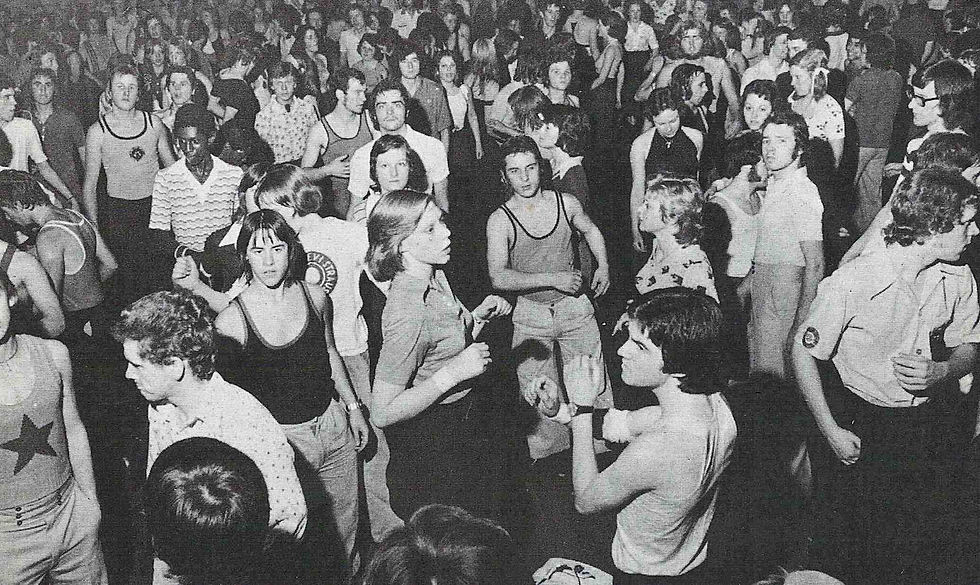
An all-nighter at the Wigan Casino had all the sights and sounds which defined the culture of Northern soul and which has underpinned its appeal through to the modern day. As soon as the doors opened at 2am, the long queue of Soulies would spill into the building, invariably causing a crush as they flocked into the Casino in their droves. The main hall could accommodate 1200 dancers and boasted a vast sprung dance floor, with a stage on one end of the hall and a balcony running along the other 3 sides. Alongside this there was a second room known as Mr M’s, which paired with the main hall gave the Casino a capacity of over 2000.
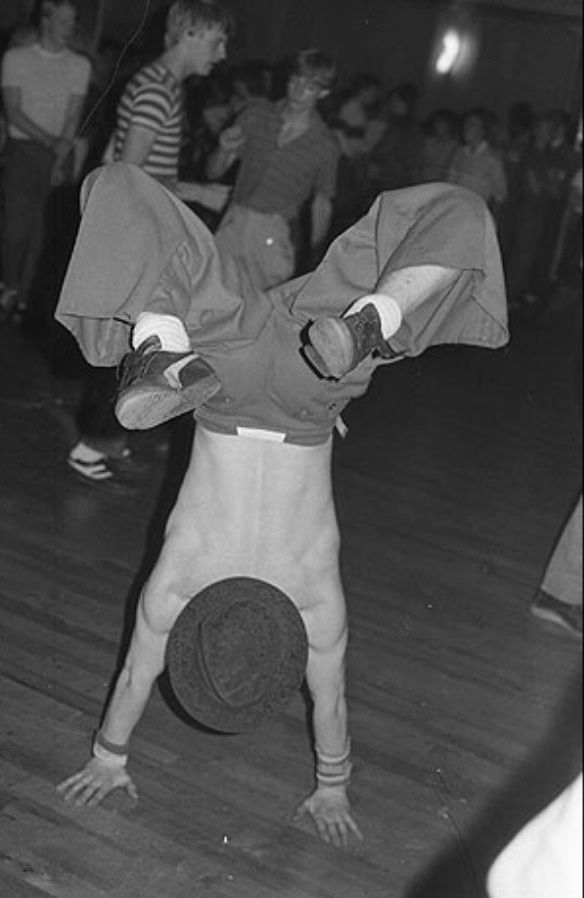
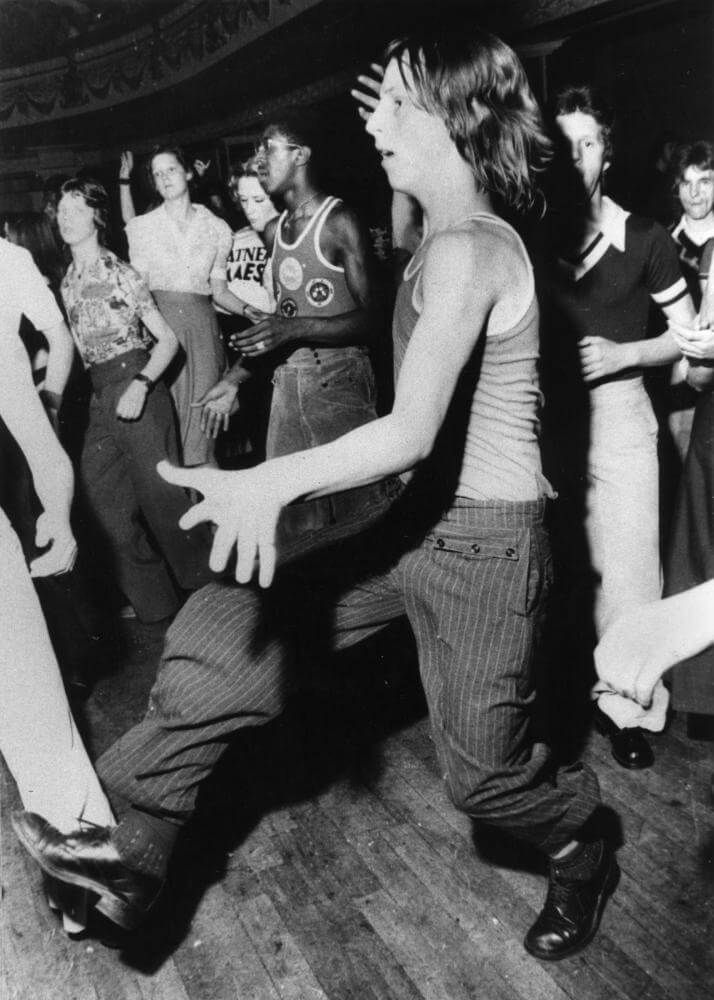
The fast-pace of Northern soul music led to the development of a dance style which resembles a number of later forms like disco and break dancing, with a premium placed on athletic moves like spins, flips, backdrops and karate kicks. Many of the more acrobatic moves were inspired by the stage performances of certain soul acts who’d toured the UK during the 1960s and 70s like Little Anthony & the Imperials and Jackie Wilson, with the most dramatic moves often coming on display when DJs played ‘stompers’, that is tracks with particularly heavy syncopated beats and fast tempos. The dance style also influenced the kinds of clothes that were worn at the Casino and across the Northern soul scene, the fashion of which included strong elements of the classic mod style like Ben Sherman shirts, brogues and shrink-to-fit Levi’s jeans but with the addition of some more light and loose-fitting clothing to cater for the more athletic dance moves, like Oxford bags and sports vests. These clothes, along with the holdalls which many Soulies brought with them to carry the clothes which they’d need for work the next day, would often be plastered with badges representing the various soul clubs and celebrating their key anniversaries. A common symbol across these badges was the Black power clenched fist symbol, a nod to culture of so-called ‘Black America’ to which Northern soul owed its music.

A loophole in the local by-laws meant that all-nighters were permitted at the Wigan Casino as long as alcohol was not served on the premises. This, and the intense demands of dancing all-night long to fast-paced and frenetic music, meant amphetamines were taken by many all-nighter attendees. Whilst speed-taking was far from ubiquitous, it did became part of the all-nighter ritual for a portion of Casino-goers and became a distinct dimension of all-nighters and the broader subculture. Drug-taking as part of the culture surrounding a music scene happened before Northern soul and continues today, but its presence did bring the nefarious aspect of drug dealing to the Casino, one which would eventually become a stick by which the club’s detractors would beat it with.

Whilst the culture is and was about far more than just the music, it was the sounds of Northern soul that brought Soulies to the Wigan Casino, and there were some particular favourites at its all-nighters. At 3am the lights were dimmed and the DJ played Al Wilson’s The Snake, which became one of the club’s many anthems. However, the 3 songs that would become enduringly associated with the Casino were the ‘3 before 8’ which would be played just before the club closed at 8am each Sunday morning: Tobi Legend’s Time Will Pass You By, Jimmy Radcliffe’s Long After Tonight is All Over and Dean Parrish’s I’m on My Way.
The End of Our Love: the End of an Era

All in all the Wigan Casino hosted over 500 all-nighters and boasted a membership of around 100,000 people, receiving visitors and acclaim from across the country and indeed the world. However in 1981, less than a decade after the first all-nighter, the unrivalled icon of Northern soul closed its doors for the final time. Its closure was the product of some local factors specific to the Casino itself but also a consequence of some challenges that were facing the Northern soul scene more broadly.

Firstly, whilst the key role of the Casino in the Northern soul movement now forms an integral part of Wigan’s cultural history, during the club’s existence many locals rejected the Casino and it faced widespread scrutiny from local officials. The vast majority of all-nighter attendees weren’t from the Wigan area and there was a clear divide between locals and Casino-goers, often scathingly referred to by locals as ‘them Soulies’. This links to the fundamental difference of a Casino all-nighter to a typical British night out at a local pub or social club. Rather than drinking pints and getting with the opposite sex to pop hits or old-time favourites, the culture of a Wigan Casino all-nighter eschewed drinking and cavorting in favour of wearing the clothes, dancing the moves and hearing the sounds of Northern soul. For many locals, especially older Wiganers, the swathes of Soulies travelling to the Casino from far and wide seemed at best peculiar and at worst threatening. This led to the club being viewed by a significant number of locals, and crucially the local council, as a problem rather than an asset for the area, one synonymous with traffic congestion, late-night problems and drug dealing.

Along with these local issues, there were broader trends acting against the Casino and the Northern soul scene to which it belonged. One of these was the fact that the music in the American R&B charts was continually evolving, leaving a limited amount of authentic tracks fitting the Northern soul mould whilst simultaneously creating an ever-growing number of new genres and sounds to entice R&B enthusiasts away from the sounds of Northern soul. With a commitment to a narrow rhythm-specific sound and a premium on older and unknown releases, the scope for the music of Northern soul to expand and evolve was fundamentally limited, leading many to come to the conclusion that the scene had run its course in the latter years of the Casino’s existence.

The diversity of opinions regarding how the Northern soul movement would fit with the changing times, or indeed whether it should aim to do so at all, was embodied by the schism between the Wigan Casino and another major Northern soul club: the Blackpool Mecca. The Mecca was a Northern soul venue from 1967 to 1979 and particularly in its later years became synonymous with a more contemporary and smoother style of Northern soul, adopting tracks which matched the Northern soul tempo but contained the new sounds coming from over the pond, like funk and early disco. In contrast, the Casino was more fundamentalist and resolute in sticking to the original blueprint of Northern soul. When DJs at the Casino did attempt to introduce ‘newies’, that is new soul discoveries from the 1960s, and more contemporary music from the 1970s, they faced stiff opposition from the vast majority of Casino attendees.

In reality, these difficulties and divides were inevitable. All sub-cultures linked to specific styles of music face internal strains when genres evolve as artists react to the pre-existing music catalogue to create new sounds. In fact, Northern soul emerged from this exact kind of divide within the mod scene. Given Northern soul’s unique focus on a highly specific sound from a specific period, it was always going to face the issue of limited new tracks and a desire by some for more contemporary music. That was simply an inherent difficulty of a sub-genre based on music that was a continent away and which by the end of the 1970s was many incarnations behind what was most popular in the R&B chart. However, this doesn’t mean that the Mecca should be considered a success at the expense of the Casino. The Casino’s commitment to Northern soul music in its purest form made it the irreplaceable icon it was and the truest embodiment of Northern soul at the peak of its power and influence.

On top of this, the Casino’s fame and the vast amount of media attention it attracted led to concerns over its commercialisation and the dilution of the club’s very essence. The massive media coverage received by the Casino meant it began to attract people considered by Casino loyalists as tourists rather than true Soulies. Longtime all-nighter attendees also criticised Casino DJs for experimenting with new kinds of tracks, namely those made up of the more contemporary sounds coming out of America, by new artists mimicking the style of Northern soul classics and particularly more novelty style records. By the late-1970s the Casino even had its own spin-off record label called Casino Classics, a profitable alternative means of revenue for the venue but also a spit in the face to the Northern soul culture which had made it world-famous, with mass reproductions being the complete antithesis of the scene’s coveting of ‘rare grooves’. This points to the Casino becoming a victim of its own success and, along with a measure of economic opportunism, the difficulty which comes to face any popular sub-genre: how to reconcile growing popularity with staying true to its core.
There’s Nothing Else to Say: Gone but Not Forgotten

In 1981 Wigan Council made the decision to refuse to extend the Casino’s lease, based on the stated aim of extending the nearby civic centre but amidst the backdrop of local discontent with the club and a broader fracturing of the Northern soul scene. As it turned out, no Northern soul club would ever meet the heights and fame of the Casino after its closure. The final all-nighter at the Casino was held on December the 6th 1981 with the same man at the helm as on its very first night just over 8 years previously, Russ Winstanley. Winstanley played the ‘3 before 8’ 3 times consecutively at the end of the night, and when the crowd refused to leave he picked a random 7” from his box of records, selecting a track which was already a Northern soul classic and which at that point took the distinction of being the last song to ever be played at a Casino all-nighter: Frank Wilson’s Do I Love You (Indeed I Do). Any hopes for the club’s revival would be dealt a final crushing blow when the building was destroyed by a fire in 1982.

Whilst the heady days of the 1970s are gone for good, Northern soul is far from dead, with Northern soul nights, DJs and dance competitions continuing to draw significant and committed crowds today. However, likely more significant than the genre’s scope today is its formative influence on contemporary British music culture. Notable Northern soul DJs like Winstanley were some of the first to build up huge followings across the UK by satisfying Soulies’ desire for niche music, whilst the Casino and its many predecessors and competitors were some of the first clubs to form a web of venues inherently aligned with a sub-culture. In this way Northern soul was key to the creation of a network of clubs, DJs, record collectors and dealers which span the UK and outlasted Northern soul’s peak to remain relevant through decades of musical development. Moreover, Northern soul was one of the first music scenes in the UK which caused records to chart based entirely on the strength of club play. Many things that may today instinctively be associated with the 1990s and the rave scene actually predate it by decades and are rooted in Northern soul.
Whilst the fact that a shopping centre now sits on the site previously occupied by the Casino seems to run against everything that the club once stood for, clearly the perception of the Casino amongst locals has dramatically changed since the 1970s and early-80s. Beyond the blue plaque adorning an exterior wall of the Grand Arcade, the Casino is now celebrated as an integral part of the town’s cultural history and its memory is promoted by the very same council which dealt it its death knell in 1981. Whist the Casino is no more, its memory lives on amongst Soulies and Wiganers alike, Dearly Beloved.


Comments