A Monkey’s History of the Soviet Union
- Jack Curson
- Oct 24, 2023
- 13 min read

Jack Curson

From its birth in the aftermath of the Russian revolution through to its collapse following the Revolutions of 1989, the Soviet Union had a dramatic and colourful history. From military conflict to scientific exploration, state transformation to political repression, any short synopsis of Soviet history is destined to fail to do justice due to its wide and complex nature. However, by using the Institute of Experimental Pathology and Therapy (IEPT) as a lens, a collection of intriguing and revealing snapshots of the country’s rise and fall can be explored.
The IEPT first opened in 1927 in Sukhumi, the capital city of Abkhazia. Today Abkhazia is a partially recognised state in the South Caucasus, however formerly it was an autonomous republic within the Georgian Socialist Soviet Republic, one of the 15 Socialist Soviet Republics which made up the Soviet Union. Whilst its mundane name may leave little impression, on its establishment it became the world’s first dedicated primate testing centre and would go on to become one of the leading scientific research centres in the world. Thriving in the region’s sub-tropical climate on the eastern coast of the Black Sea, the IEPT went from an initial population of just 2 olive baboons and 2 chimpanzees to a population of around 2500 monkeys at its peak.
Involved in some of the Soviet Union's most ambitious projects, from contributing to the country’s groundbreaking space exploration and medical research programmes through to, incredibly, being the base from which the nascent-Soviet state sought to construct a new kind of enhanced human being, the IEPT helped to shape, and was fundamentally shaped by, the Soviet Union’s tumultuous 71-year history.
The Institute’s Origins: Super Apemen and Political Purges

Incredibly, the IEPT’s origins are rooted in a state-directed project to create a superhuman being. Today, any arguments in favour of large-scale eugenics programmes are likely to be rapidly shot-down. Historically, this can be considered to be in large part due to the atrocities of the Holocaust, a mass-scale programme of extermination and human experimentation which was driven by the extreme racial ideology of the Nazis. As the horrors of the Third Reich were laid bare after the conclusion of the war, arguments in favour of mass eugenics programmes were quickly sidelined from mainstream thought and pushed aside as fringe, extremist ideas.
However, prior to its associations with Nazi Germany and the Holocaust, eugenics had been hugely popular amongst politicians and thinkers alike. Whilst the concept of eugenics dates back as far as Plato, a burgeoning popular eugenics movement sprung up across the Western world during the late-19th century, with large numbers of eugenics societies being established well into the 20th century. Whether it be the notion that humans needed to be fitter to thrive in an increasingly industrialised society or simply that society, and the humans living within it, needed to be actively reconstructed to allow for a better system of living, eugenics drew support from across the political spectrum, from socialists through to hardline conservatives. It is in this broader context that the IEPT would be born.

The key individual in the genesis of the IEPT was the Russian biologist Ilya Ivanov. Initially, Ivanov received international acclaim amongst horse breeders and the scientific community alike for his pioneering work on artificial insemination, with his research proving that artificial insemination could allow a single stallion to fertilise up to 500 mares, as opposed to the 20-30 that was possible by natural fertilisation. However, Ivanov quickly went on to explore the possibilities of using artificial insemination for hybridisation, which he used to create cross-breeds of a number of animal species, including a zubron (a European bison-cow hybrid), a zeedonk (a zebra-donkey hybrid) and many other combinations of rats, mice, rabbits and guinea pigs. Taking this concept even further, as early as 1910 Ivanov gave a speech to the World Congress of Zoologists in which he explored the possibility of creating a human-ape hybrid through the use of artificial insemination.

It was in 1924, just 2 years after the creation of the Soviet Union, that Ivanov formally proposed that the Soviet government develop a human-ape hybridisation programme. Crucially, Ivanov presented the endeavour as having the potential to advance the communist cause. Given the Marxist conviction that religion is a form of social control equivalent to the ‘opium of the people’, the nascent Bolshevik government was seeking to eliminate religion across its territory. Ivanov argued that if he could create a viable offspring between an ape and a human it would prove Darwin’s conviction regarding the close relations between the two species and thereby undermine traditional Church doctrine. Alongside this religious aspect, there was a chain of political thought which saw the use of eugenics to transform people themselves as complimenting the political project of revolutionising the state’s political and economic systems. From this perspective, eugenics could be used to create a superior human that could carry out the gruelling work of industrialising the Soviet Union’s vast land mass, thereby propelling the country ahead of the capitalist West.
Ivanov’s proposal was met with disapproval by the scientific establishment and he was initially rebuked by the head of the Commissariat for Education. However, he eventually received the backing of Nikolay Gorbunov, a high-ranking Soviet official and former personal secretary to the leader of the Russian Revolution, Vladimir Lenin. Having received the funds to secure the apes required for his project, Ivanov travelled to the Pasteur Institute’s primate centre in French Guinea in 1926. Here he artificially inseminated 3 chimps with human sperm, but alongside this Ivanov also wanted to inseminate human women with sperm from chimpanzees. Disturbingly, knowing that none of the local Guinean women would agree to such an experiment, he planned to conduct the insemination under the pretext of a medical examination, a grim plan which thankfully was forbidden by the French governor of the colony.
With his plan for human insemination impeded and the failure of any of the 3 chimps he’d inseminated with human sperm to conceive, Ivanov decided to return to the Soviet Union with 20 primates, only 4 of which would survive the long journey to Sukhumi to become the first members of the IEPT’s nursery, which was established quickly after Ivanov’s return. Incredibly, records reveal that at least 5 Soviet women volunteered themselves to carry half-ape babies in the interests of advancing Soviet science. However, Ivanov’s project was put on hold when, after all of the female apes had died, the last remaining adult male, a 26 year-old orang-utan named Tarzan, died of a brain haemorrhage.

Whilst a host of new chimps arrived in Sukhumi in 1930, by this time Ivanov had fallen victim to the form of political repression which has come to be intrinsically linked with Stalinism: the political purge. The most infamous of the Soviet purges was the Great Purge, in which somewhere between 700,000 and 1.2 million Soviet citizens were killed from 1936-1938 as part of Stalin’s campaign to solidify his power over the Communist Party and the Soviet state. However, the purge that dispatched Ivanov, along with over 3,000 other mainstream biologists, came some time before this in the early 1930s. In totalitarian states violence is an inherent part of politics, which itself seeps into all aspects of society. As such, scientists weren’t isolated from the brutal power struggle that was an ever-present within the Soviet political system.

Whilst Ivanov was working on creating a human-ape hybrid, another Soviet biologist, Trofim Lysenko, was leading a political campaign against genetics and mainstream Soviet biology more broadly. Lysenko rejected natural selection in favour of Lamarckism, a now discredited theory which proposes that organisms can pass on the physical characteristics that they acquire in their lifetime to their offspring. Lysenko’s campaign was designedly political. He described the concept of the gene as a ‘bourgeois invention’ and argued that his theory could be used to radically increase crop yields and thus help generate an agricultural revolution. This latter conviction particularly appealed to Soviet leaders, given the agricultural crisis the country was experiencing as a result of the government’s policies of forced farm collectivisation and the extermination of the more affluent kulak farmers.
Whilst Stalin was skeptical of Lysenko’s belief that all science is class-oriented, he put his personal support behind Lysenko, who would eventually be put in charge of agricultural affairs as head of the Soviet Academy of Agricultural Sciences. Amidst this political reconfiguration of the Soviet scientific world, Ivanov, along with a host of other scientists working in the field of primate research, was the subject of political attack. He was arrested and sentenced to 5 years of exile in Alma Ata in modern day Kazakhstan, where he worked at the Kazakh Veterinary-Zoologist Institute until his death from a stroke in March 1932.
From Science Fiction to Scientific Breakthroughs

Over time the fantastical sci-fi projects that characterised the early years of the IEPT were replaced with methodical scientific research which helped to advance scientific knowledge and save countless human lives. Whilst penicillin was first discovered by Scottish microbiologist Alexander Fleming in 1928, it was during the Second World War that major research was conducted into its potential use for clinical purposes. Just as its Western allies were working on developing penicillin based treatments and mass production methods, two Soviet microbiologists, Zinaida Yermolyeva and Tamara Balezina, identified and isolated a penicillin-producing fungus strain. This discovery came just as the Soviet Union faced a defining moment in its hitherto short history, with its very existence being challenged following Hitler’s massive invasion of the country in June 1941, codenamed Operation Barbarossa. Monkeys at the IEPT were used to test the new treatment, which after successful trials was rolled out and used in the latter parts of the war, saving many thousands of Soviet lives during the Soviet counterattack against Nazi forces through its own territory and onwards until it reached Berlin.

After the conclusion of the Second World War, and with the onset of the Cold War, the IEPT continued to be at the vanguard of medical research in the Soviet Union. Research and testing at the IEPT was key in the creation of the country’s first polio vaccine, whilst scientists at the IEPT also worked on all the major diseases of the 20th century, including leukaemia, yellow fever, typhus and hepatitis. During the 1950s, word got out to the rest of the world about the medical research being conducted in Sukhumi. In 1957, taking advantage of the short-lived thawing in relations between the Cold War rivals following Stalin’s death and Khrushchev’s accession to the Soviet premiership, an expert commission from the United States, headed by President Eisenhower’s own personal doctor, was sent to the IEPT. By 1964, 28 further delegations were also sent from the United States to visit the IEPT. Clearly the initial travelling commission was impressed, as on their return to the commission recommended that a similar institute should be set up in the United States, with 7 centres of a similar kind to the IEPT eventually being established across the United States.

As well as becoming a leading institute for medical research during the Cold War, with the onset of the 1980s it also became involved in the Soviet space programme. The IEPT’s involvement in the Soviet space programme came after the fabled space race, which spanned around 20 years from the mid-1950s to the mid-1970s. Whilst it was the United States that famously put the first man on the moon in 1969, the Soviet Union was the first to achieve many of the other major feats in space exploration. It was the the first country to successfully launch an artificial earth satellite in 1957, whilst the Soviet cosmonaut Yuri Gagarin was the first human to be sent into space in 1961. However, by the 1980s and 1990s the Soviet Union, and later its successor state the Russian Federation, worked in cooperation with the Unites States on a variety of space programmes, including the Bion satellite programme. This programme sought to explore space medicine and the effects of space on biological matter, and part of this research involved sending monkeys into space and exploring the bodily effects of spaceflight.

Just a few of the IEPT’s most intelligent rhesus macaques aged between 2 and 3 years old were selected for the programme. Prior to spaceflight, they were subject to a number of tests, many of which seem particularly cruel by today’s standards. One experiment involved hanging the monkeys on ropes in the same position or up to 60 days, with electrodes implanted on their heart, brain and muscles to track the bodily effects of suspension. Animal testing continues to be an evocative issue for many, and whilst animal rights activism may note have been as prominent in the Soviet Union during this period, important IEPT figures have spoken up on the ethical concerns related to the use of monkeys in their research. Boris Lapin, the IEPT director of over 30 years, stated that, ‘we're aware of the ethical difficulties… But in some cases monkeys are the only animals we can use. Thalidomide was tested on mice and other animals but not on monkeys, and you remember what happened there.’ Regardless of an individual’s position on the issue, it is worth noting that the Soviet Union wasn’t the only, or the first, state to use apes as part of their space programmes. Macaques were also used by the United States in its first human space programme, the Mercury programme, which began in 1958, whilst France and Iran have all also used apes in their respective space programmes.
Eventually 6 of the IEPT’s macaques were sent into space, all of which survived their missions. In 1987, 2 macaques named Dryoma and Yerosha were launched on the Bion 8 satellite, with Dryoma eventually being presented to Cuban leader Fidel Castro. The last pair of monkeys that were sent to space from the IEPT, Krosha and Ivasha, were launched on the Bion 10 satellite in 1992. The use of monkeys on the Bion program continued until 1997, when one of the monkeys that had been sent into space died during a post-flight biopsy and another almost died whilst undergoing the same procedure. The fatality raised questions regarding the ethics of using animals for space research, leading NASA to withdraw its support for further Bion satellites.
Soviet Collapse and the IEPT’s Decline
.jpg )
By the time Mikhail Gorbachev became President of the Soviet Union in 1985, the country was experiencing economic stagnation and was in dire need of political and economic reform. Whilst Gorbachev's policies of perestroika (restructuring) and glasnost (transparency) aimed at addressing the core structural issues within the state’s economic and political systems, his reforms failed to stop the Soviet Union’s decline. Amidst mounting independence movements across the national republics which made up the Soviet Union, the transcontinental state eventually dissolved in 1991. This seismic event led to political instability and military conflicts, with post-Soviet conflicts breaking out across the land mass, whether it be the Tajikistani Civil War in central Asia or the South Ossetia War and Chechen Wars in the Caucasus. The Soviet Union’s collapse also had catastrophic consequences for Abkhazia and the IEPT.
The vast majority of the Georgian population chose to boycott Gorbachev’s 1991 referendum on a renewed Soviet constitution, however the ethnically-Abkhaz population in Abkhazia voted overwhelmingly in favour of preserving the Soviet Union. Later in 1991, around 99.5% of the Georgian population voted in favour of Georgian independence in the republic-wide referendum, a referendum which was boycotted by the ethnically Abkhaz population. Consequently, the Georgian Supreme Council declared its independence from the Soviet Union on April 9th 1991, exactly two years after the Soviet army cracked down on a peaceful protest in demand of independence in the Georgian capital, Tbilisi.

These political fault lines and ethnic tensions between the Abkhaz and the Georgians, which were then the largest single ethnic group in Abkhazia, eventually led to the outbreak of military conflict in 1992. The war, which lasted just over a year and was marred by ethnic violence on both sides, resulted in victory for the Abkhazian side and Georgia’s loss of control over the territory. In the earlier stage of the war Georgian troops engaged in ethnically based looting, assault and murder, whilst in the process of securing control of Abkhazia, the Abkhaz separatist forces engaged in a large-scale campaign of ethnic cleansing of Georgians from Abkhazia, leaving around 5,000 ethnic Georgians dead and over 200,00 displaced.

This environment of political instability, economic chaos and vicious violence inevitably had a colossal impact on the IEPT. With the outbreak of the war in 1992, most of the institute’s primates and scientists crossed the border into Russia to set-up a new centre, the Research Institute of Medical Primatology. Those that remained in Sukhumi were faced with a whirlwind of military conflict and societal collapse. When war broke out, as well as those being actively studied within the IEPT, there were around 1000 monkeys living freely in a special zone in the mountains of south Abkhazia, where their population was monitored and their behaviour’s studied. Many of these monkeys were killed in the crossfire, whilst others were stolen by troops and used as mascots. Many of the monkeys that lived within the IEPT died from starvation or simply froze to death due to the lack of heating and electricity. The IEPT had gone from a scientific beacon to a symbol of Soviet collapse.
Despite a ceasefire following the war’s conclusion and years of negotiations, the dispute in Abkhazia remains unresolved, and fighting has reignited on numerous occasions. The most notable of these was in 2008, when the Abkhaz military fought alongside Russian forces against Georgia, consequently leading to both the annulment of the 1995 ceasefire agreement and Russia’s formal recognition of Abkhazia. Today, the breakaway region runs its own affairs but is recognised by just 5 countries, with Georgia and almost all UN member states considering Abkhazia to be a sovereign territory of Georgia. Abkhazia is subject to an economic blockade by Georgia, which also maintains a government-in-exile. The South Caucasus remains one of the most politically tense regions of those making up the territory of the former-Soviet Union, as evidenced by Azerbaijan’s recent seizure of control over the contested Nagorno-Karabakh region.
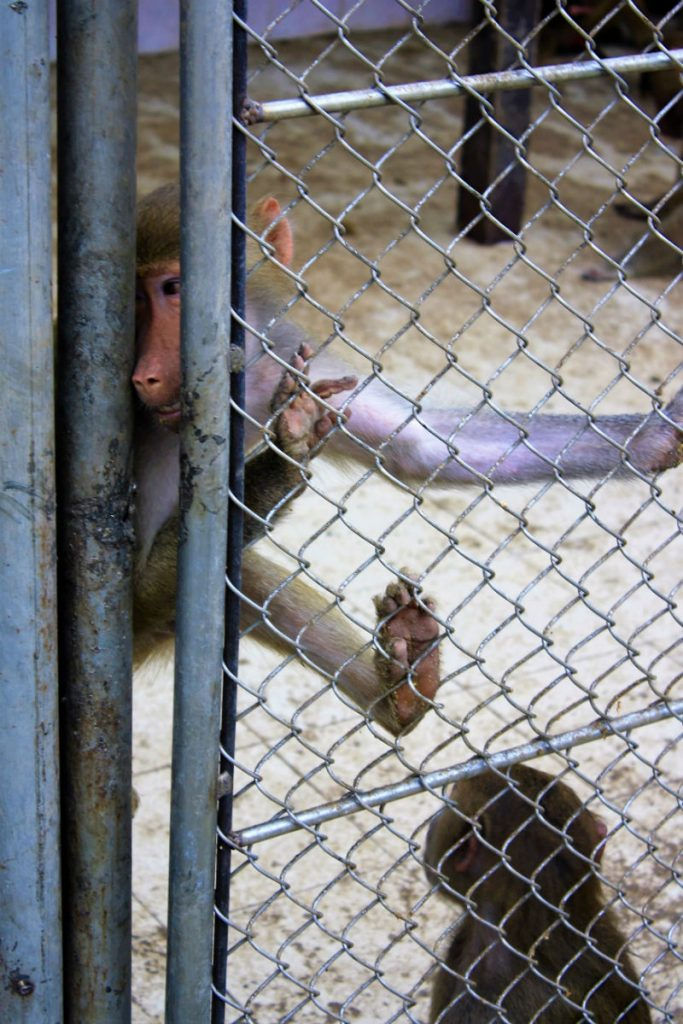
The few scientists that remained at the IEPT during the war and have stayed since have sought to try and resurrect the IEPT’s innovative scientific research programmes, but have struggled amidst their limited resources. Whilst Abkhazia is unofficially backed by Russia, its cash-strapped authorities can’t afford to offer the financial support that’s required to return the IEPT to the forefront of modern scientific research. Rather than groundbreaking discoveries, the IEPT now conducts simpler and cheaper experiments with assistance from local medical students. Much of its infrastructure remains in a state of disrepair, with large parts of the infrastructure not being updated since the Soviet period. A section of the IEPT’s nursery remains open to tourists, but where it used to receive up to 1 million visitors annually, today it receives only around 25,000 visitors each year.
In contrast, the centre set up in the Russian city of Sochi by scientists fleeing the War in Abkhazia is in a far better shape. Whilst it’s not free from financial difficulties, it has the most up-to-date equipment and remains at the forefront of medicine, with its projects including research on stem-cells, AIDS vaccines and even the effects of radiation on monkeys in preparation for potential manned-missions to Mars. Whereas the research institute in Sochi has a strong population of somewhere around 4500 monkeys in its colony, inbreeding remains a serious problem in the IEPT given its small population of just a few hundred monkeys.

The IEPT of today, with many of its buildings strewn with bullet holes and covered in weeds, gives a bleak snapshot of an institute which throughout its first 70 years of existence often acted as a microcosm of the Soviet Union. Whether it be the heady dreams of a eugenics-induced communist super-human, brutal political repression, incredible scientific discoveries or its dramatic decline, the life of the IEPT has been interwoven of that of the Soviet Union. Today, amidst Ukraine’s persistent targeting of Russia’s Black Sea Fleet in Crimea, Vladimir Putin has recently signed a deal with the President of Abkhazia to establish a permanent Russian naval base on the Black Sea coast close Sukhumi. As such, the IEPT may yet be implicated in the machinations of Moscow’s leadership and regional politics. The IEPT’s turbulent history may well have reached its most extreme and eccentric points, but its story remains unfinished.



Comments