For the Few, Not the Many: The Royal Exemptions Enshrined in British Law
- Jack Curson
- Aug 7, 2023
- 12 min read

Jack Curson

Shockingly, since 1967, the British monarch has benefited from personalised exemptions which have been written into over 160 acts of parliament. From workers’ rights to animal welfare, environmental regulations to tax legislation, an array of bills have been amended to afford the monarch unique privileges as a private citizen in British law. Some unique privileges enjoyed by the monarch, whilst somewhat exhibitive of the inherent inequality from which the crown benefits, are largely quirky peculiarities. For example, as a passport is issued in the name of the crown, King Charles can travel without one whilst he and his immediate family members are also exempt from having to take part in jury duty. However, many of the exemptions enjoyed by the monarch are indicative of a more fundamental and malign inequity, one which is based-on inherent privilege and one which generates very real material benefits for the crown.
The significant number of royal exemptions are fundamentally linked to the role of the monarch in Britain’s legislative process. King’s Assent, the final procedure of the legislative process upon which a bill becomes a law, is likely the better known procedure involving the monarch. However, it is King's Consent that is the greatly more consequential process when it comes to royal exemptions. It requires government ministers to inform the monarch when upcoming legislation will affect either: the royal prerogative, that is the fundamental powers of state which are formally vested in the monarch but which are in practice exercised by the government, or the Duchy of Lancaster, that is the private estate of the British sovereign. Only after being approved by the monarch following consultation between the government and the crown can pieces of legislation meeting these criteria be discussed and voted upon in parliament.

Whilst the origins of King’s Consent are unclear, it’s definitely been part of the British legislative process for hundreds of years. The earliest evidence of it being invoked dates back to 1728, when King George II gave parliament permission to debate the Suppression of Piracy Bill. Prince’s Consent is an identical process which applies to bills which impact the Duchy of Cornwall, that is the private estate possessed by the eldest son of the reigning British monarch. This process appears to be a more recent development, one which is unlikely to date back beyond 1848. Both King’s Consent and Prince’s Consent, two conventions which can be jointly referred to as Royal Consent, have been undertaken for over 1000 parliamentary acts in total.

Given that the reigning monarch is immune to prosecution by virtue of the centuries-old doctrine of sovereign immunity, some may question the necessity of the vast number of royal exemptions. However, the exemptions act as an extension of royal privilege, making behaviour that would otherwise be illegal actually permissible when carried out by the monarch. Given the immense impact that both domestic and international media have historically had on the royal family, press coverage of a monarch breaking the law represents a major risk to the crown, a risk that can be averted through these clandestine exemptions.
King’s Consent is supposed to enable the crown to protect its rights without being forced to resort to blocking a bill after its passage through parliament by refusing King's Assent, an action which would necessarily prompt a constitutional crisis. However, the evidence of its use suggests that the crown has utilised its power expansively to manipulate a vast range of bills to suit its own interests before they reach parliament, in a way which seems to be rooted more in raw self-interest than considered constitutional caution.
Furthermore, in certain cases the convention has even been operationalised by the government to inhibit initiatives by MPs in the House of Commons. Acting on ministerial advice, the Queen refused to consent to numerous private members’ bill, that is bills which were introduced by an MP rather than the government. As such, various bills were killed off without the government being required to attain the sufficient number of votes in parliament, including the Palace of Westminster (Removal or Crown Immunity) Bill (1988), the Reform of the House of Lords Bill (1990) and the Military Action Against Iraq (Parliamentary Approval) Bill (1999). Whilst this may shine more light on the underhand tactics used by various governments to repress activist MPs rather than royal egoism, it still highlights the murky and anti-democratic nature of the convention.
Evidently, Royal consent is more than just part of the pageantry of the monarchy or an inconsequential peculiarity of parliamentary procedure. It is a real instrument of influence for the crown, and an anachronism which in both its opaque nature and the extensive leverage it confers, undermines the supposed fundamentals of parliamentary democracy.
It All Comes Down to the Money
‘The difference between tax avoidance and tax evasion is the thickness of a prison wall’ - former-Labour MP Denis Healey

In its recent extensive investigation on the topic, the Guardian estimated that King Charles’ worth amounts to almost £2 billion. From Monet paintings to diamond-encrusted jewels, racehorses to his Duchy Organics food company, Charles has a plethora of highly valuable assets. Indeed, all of that's before even getting on to his mammoth property empire and investment portfolio. Even if the Guardian’s estimate is inflated, as is suggested by Buckingham Palace, the King’s estate comfortably runs into many hundreds of millions of pounds.
The inability to pinpoint Charles’ true wealth is rooted in the fact that the monarchy is exempt from the Freedom of Information Act (2000), as a result of the technicality that the Royal Household is not a public authority within the meaning of the act. Given that freedom of information is supposed to inhibit corruption by enhancing the transparency of public bodies, the fact that the crown prefers to provide information on its own accord rather than through the country’s general framework can be considered somewhat revealing. Furthermore, Charles also benefits from a more specific exemption from being compelled to provide information to tax inspectors or official statisticians. If transparency and open government are accepted as important features of democracy, these opaque measures must be considered to be fundamentally anti-democratic.

Evidently, Charles has vast amounts of wealth. Also, crucially, he has an exclusive mechanism through which he can secure exemptions so as to retain this substantial wealth, just as his mother did before him. One important way in which the monarch is able to protect their wealth is via their unique position as the beneficiary of a number of tax exemptions. The crown isn’t required to pay income tax, capital gains tax and inheritance tax, including on the monarch’s private interests. Charles’ total immunity from inheritance tax has allowed him to receive his mother’s immense wealth without losing any money to the public purse, a privilege which will have had a massive impact on bolstering Charles’ unknown wealth.

Looking back through Britain’s recent history, these tax exemptions are far from a perennial, age-old arrangement. Indeed, Queen Victoria and her son King Edward VII both paid income tax throughout their reigns. After the death of Edward in 1910, his second son and heir to the throne King George V negotiated various exemptions. George was able to get the tax removed from the civil list, that is the public funds that are paid to the monarch to finance their staff and duties, as well as securing tax exemptions for the royal estates. However, it was George VI, George V’s son and the Queen’s father, that attained total tax-exempt status for the monarch, including for his private income. He was granted a full income tax exemption as compensation for the financially crippling abdication settlement which was agreed in 1936 following his brother Edward’s abdication from the throne, a settlement which left him having to personally pay much of the former-King’s large annuity.
This tax arrangement continued for just over half a century until 1992, when there was a scandal over the use of tens of millions of pounds of public funds to restore the royal residence of Windsor Castle after a major fire. In response to widespread public outrage, the Queen and the then-Prince Charles agreed to voluntarily pay some taxes from 1993 onwards, including income and capital gains tax on their private investments and estates. However, the commitments were stated to be only ‘to the extent that the income is not used for official purposes’, whilst the exact sum of this income tax remains undisclosed.

In 2017, the royal family was implicated in the leak of the Paradise Papers, a set of over 10 million documents relating to global tax avoidance. Alongside some of the biggest multinational corporations like Apple, Nike and Facebook, the papers revealed that the Duchy of Lancaster has used offshore private equity funds to avoid paying more tax on its holdings. Evidently, even to the unknown extent to which the British monarch does pay tax, the same kind of avoidance that many of the richest individuals and corporations employ are used to reduce tax payments, and thus protect their wealth.

Moreover, Royal Consent has also been utilised by the royal family to secure more specific exemptions aimed at protecting their economic interests and cloaking the information surrounding them. For example, in the 1990s the then-Prince Charles utilised Prince’s Consent to pressure John Major’s government to secretly change a proposed leasehold reform as a means of benefiting his landed estate. The altered act, which became law in 1993, sought to extent the rights of certain tenants who’ve lived in properties for a specific number of years to buy their homes from their landlords. Charles’ lobbying secured a special exemption for Newton St Loe, a small Somerset village which forms part of his private estate, with the Guardian finding that the Major government saw the special exemption as a way to ‘avoid a major row’. As such, a fusion of political expediency by the government and murky lobbying from the royal family led to the Charles’ own interests
taking precedence over citizen’s rights.
The Queen has also been greatly implicated in recent investigations surrounding the use of Queen’s Consent, with it recently being revealed that she lobbied for the government to change a draft law so as to conceal her ‘embarrassing’ private wealth from the public. In 1973, the Queen’s private lawyer pressured ministers to alter a bill which sought to prevent investors from secretly building up major stakes in listed companies by acquiring shares through front companies or nominees. A clause in the bill granted directors the right to demand that any nominees owning their company’s shares reveal the identities of their clients, however such a system would allow the Queen’s various shareholdings to be disclosed to the public.
As such, the government inserted a clause into the law which granted itself the power to exempt companies used by ‘heads of state, central monetary authorities or international bodies formed by governments’ from new transparency measures. Whilst the clause appears to be relatively non-specific, it was specifically designed to benefit the Queen. Such an exemption was almost immediately granted to a newly formed company called Bank of England Nominees Limited, a state-backed shell corporation which was created to place a veil of secrecy over the Queen’s private shareholdings and investments. Shares believed to be owned by the Queen were transferred to the company in 1977, just a year after the bill became law.
The Royal Relic in Modern Britain
‘Diversity is indeed a strength and not a threat’ - Queen Elizabeth II

Whilst it’s apparent that economic self-interest is a sustained focus evident in much of the royal exemptions, it’s not the only one. Indeed, arguably the most controversial exemptions relate to workers’ rights and anti-discrimination laws. Uniquely, as a private employer the monarch isn’t required to observe various workers’ rights laws, health and safety laws and pensions laws. Moreover, the monarch’s employees are prevented from pursuing sexual and racial discrimination complaints. There’s an exemption of this particular kind included in the most modern piece of anti-discrimination law, that is the Equality Act (2010), whilst similar exemptions date back to the late-1960s.
In a recently publicised communication between the Queen’s chief financial manager to a civil servant in 1968, a Buckingham Palace official stated with regards to clerical roles in the royal household that, ‘it was not, in fact, the practice to appoint coloured immigrants or foreigners’. In response to these revelations, Buckingham Palace has stated that its records highlight that people from ethnic minority backgrounds were hired in these positions in the 1990s, but that prior to this decade it didn’t keep records on the racial backgrounds of employees. Much like with its arrangement for paying tax, the crown’s inclination towards self-regulation suggests a troubling aversion towards transparency and oversight, one which is seemingly more indicative of a shady elite than a benign institution.

Due to concerns that such exemptions wouldn’t be palatable for much of the British public, the crown’s immunity to these kinds of laws has typically been opaquely drafted. For example, the Queen’s exemption from the Equality Act (2010) is only apparent through a one-line statement in an accompanying explanatory document. In this way exemptions remain accessible to the public whilst being consciously and designedly concealed. These kinds of attempts at concealment are nothing new, with discrete approaches dating back to at least the 1970s. In reference to an exemption from the Sex Discrimination Act (1975), the Queen’s private secretary wrote that it held ‘the substantial merit that it does not draw attention to the position of the sovereign’.

Multiculturalism, gender equality and workers’ rights are fundamental parts of what is supposed to be a modern Britain. The idea that one of the country’s oldest and most prominent institutions has not been brought in line with current laws regarding discrimination makes that very same institution appear archaic to its core. Furthermore, the fact that such exemptions are actively obscured from public attention in the hope of avoiding scrutiny just serves to prove that the crown is all too aware that they are incompatible with pervasive values and norms in Britain.
Action Speaks Louder Than Words
‘The time for words has now moved to the time for action.’ - Queen Elizabeth’s address to the COP26 summit in Glasgow in 2021

Finally, royal exemptions have also been written into laws regarding environmental protection. In the same year that she made her speech to the long-awaited climate change summit in Glasgow, the Queen’s lawyers secretly lobbied for her estate to be exempt from parts of a major climate-related Scottish bill. The Heat Networks Bill sought to reduce carbon emissions by enabling the construction of pipelines which utilise renewable energy to heat clusters of homes and businesses, as an alternative to separate fossil fuel boilers. Following secret lobbying from the Queen’s lawyer, public authorities and companies were prohibited from compelling the Queen, one of the largest landowners in Scotland, to sell pieces of her land to enable the construction of green energy pipelines.
Given that this is just one of many different types of laws which contain clauses exempting the monarch's private property holdings from compulsory purchase, it seems that the main focus of this kind of exemption is the same economic self-interest identified earlier in this article. However, when these kinds of exemptions are written into bills focusing on climate change, the monarchy appears to be fundamentally hypocritical on the issue of environmental protection.

King Charles has long been a major advocate for environmental protection. It was in 1968, 7 years before the phrase ‘global warming’ was first coined, that Charles made his first speech concerning environmental protection; he has set up various environmental initiatives like the Princes’s Rainforests Project and the International Sustainability Unit; and has made addresses to numerous international climate change conferences. Furthermore, Charles’ son and the heir to the throne, Prince William, has also championed environmental causes, including the Earthshot Prize, which promotes solutions to the world’s most urgent environmental challenges. Whilst it may have been the Queen’s lawyers which lobbied for changes to the Heat Networks Bill, in its current form it will clearly benefit both the current and future monarch, two individuals which have put combatting climate change at the forefront of their agendas as activists and philanthropists. Given that the death of the Queen marked the loss of the monarchy’s stalwart pillar in the eyes of many in the British public, this kind of blatant hypocrisy is likely to become increasingly corrosive for Charles, William and the royal family more broadly.
Thinking Forward
‘The existence of a hereditary monarchy helps to prop up all the privilege and patronage that corrupts our society; that is why the crown is seen as being of such importance to those who run the country - or enjoy the privileges it affords’ - former-Labour MP and socialist Tony Benn
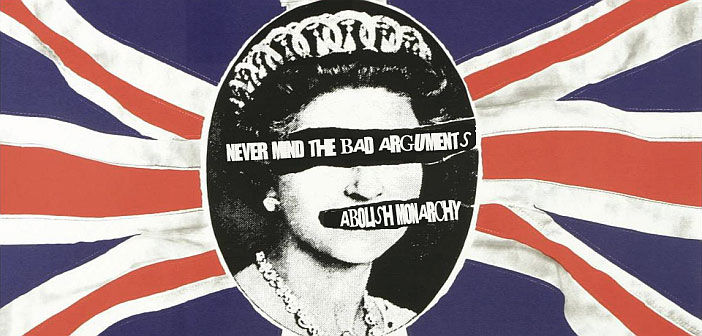
Overall, evidence surrounding the crown’s egoistic use of Royal Consent is unlikely to change the mind of staunch royalists, but for those more neutral or undecided when it comes to the future of the British monarchy, revelations surrounding the vast number of royal exemptions in British law could be significant. What might at the surface seem a fairly non-consequential, long-existing parliamentary procedure can, in its expansive use to cynically further the royal family’s interests, quickly appear to be indicative of a more fundamental inequality inherent in Britain’s constitutional monarchy. The idea of a privileged few may not be inherently irksome to those who instinctively see the monarchy as a relatively benign, age-old mainstay of British society. However, evidence of the crown’s pursuit of economic interests and power preservation at the expense of workers’ rights, the environment and broader equality under the law is likely to prompt at least some reflection on the extent to which the royal family is a non-partisan and benevolent institution.

In 2014, the House of Commons Political and Constitutional Reform Committee stated that parliament could abolish Royal Consent by resolution rather than requiring a change in legislation, given that it is a matter of parliamentary procedure. Whilst the political will within parliament for such a move would likely be lacking given the current rightward-leaning political climate and the divisive nature of attitudes towards the monarchy in British politics and society, the removal of Royal Consent would eradicate a mirky aspect of British politics and royal power. In addition to removing Royal Consent, the existing exemptions could and should be reviewed for the sake of public transparency and the promotion of equality under the law. These kind of practical changes, whilst ambitious in their own right, would deliver the kind of limited progress that could conceivably be achieved in the absence of a broader republican movement.



Comments